Hoarding Cleanup for Arlington, TX Homes

Local hoarding cleanup providers clear hoarded homes in Arlington, TX, a city of about 402,000 people where Census figures show 63% of homes were built before 1990 and the median home dates to 1985. A full hoarding cleanup covers the whole house in one pass, from a garage stacked to the rafters to a Level V home with rodents, mold, and human waste on the five-level Clutter-Hoarding Scale. Call 817-270-9579 to connect with a local provider.

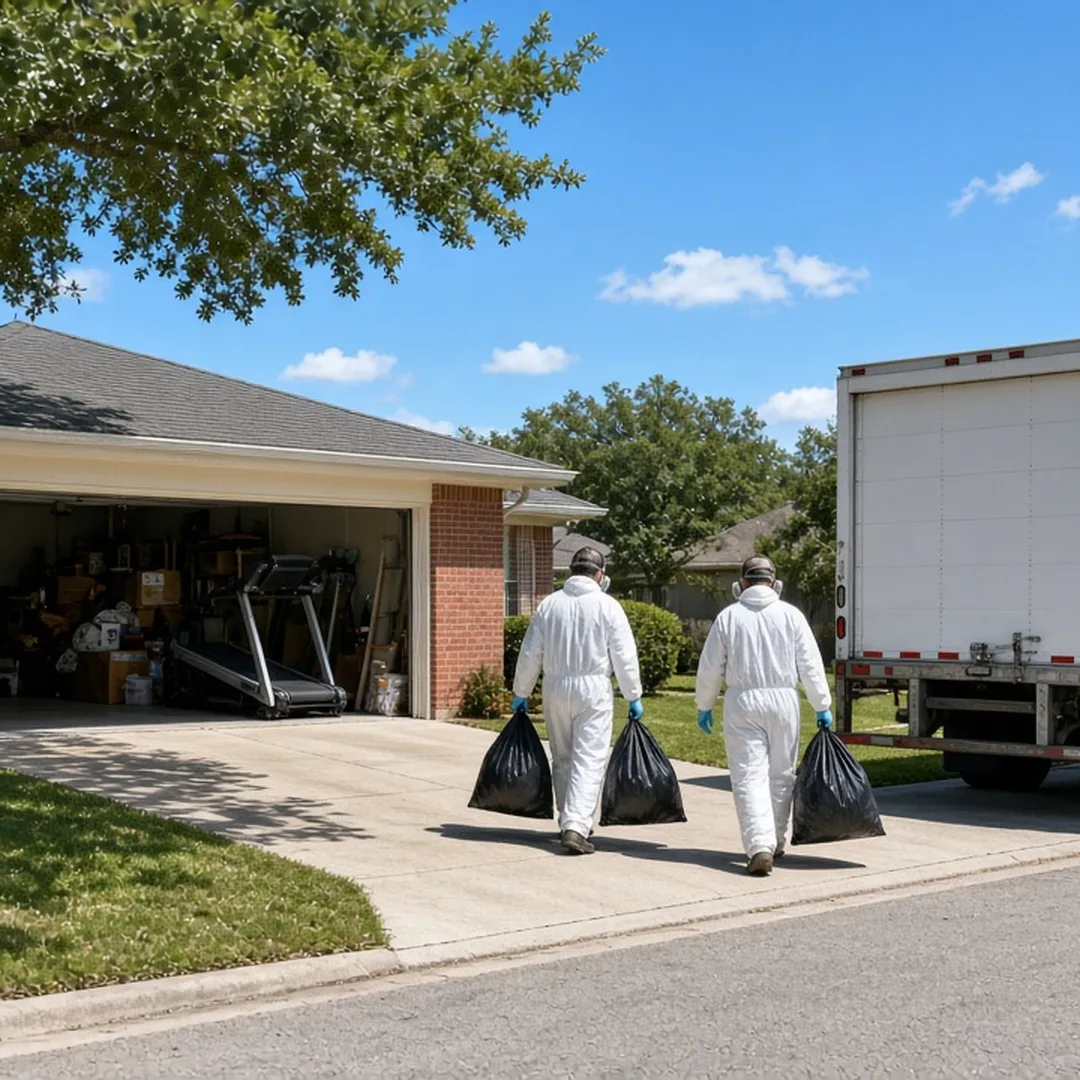
Workers carrying sealed bags from a brick ranch house during a hoarding cleanup in Arlington, Texas

A Hoard Is More Than a Haul-Away Job

A hoard is more than a haul-away job because the hazards are under the piles. Under the boxes sit droppings, pet and human waste, spoiled food, mold, and leaking chemicals, none of which a haul-away crew notices until it's already carrying them out. The CDC tells people not to sweep or vacuum rodent droppings, urine, or nests, because it puts virus particles into the air. Moving a hoard without wetting it down first spreads the contamination through the house. The side-by-side of hoarding cleanup and junk removal shows where the two jobs split.

Qualified hoarding cleanup providers work in a set order. They air out the rooms, soak droppings and waste with disinfectant before anything moves, seal contaminated material in its own bags, and disinfect the floors and walls underneath. Hauling, cleaning, and deodorizing come after that.

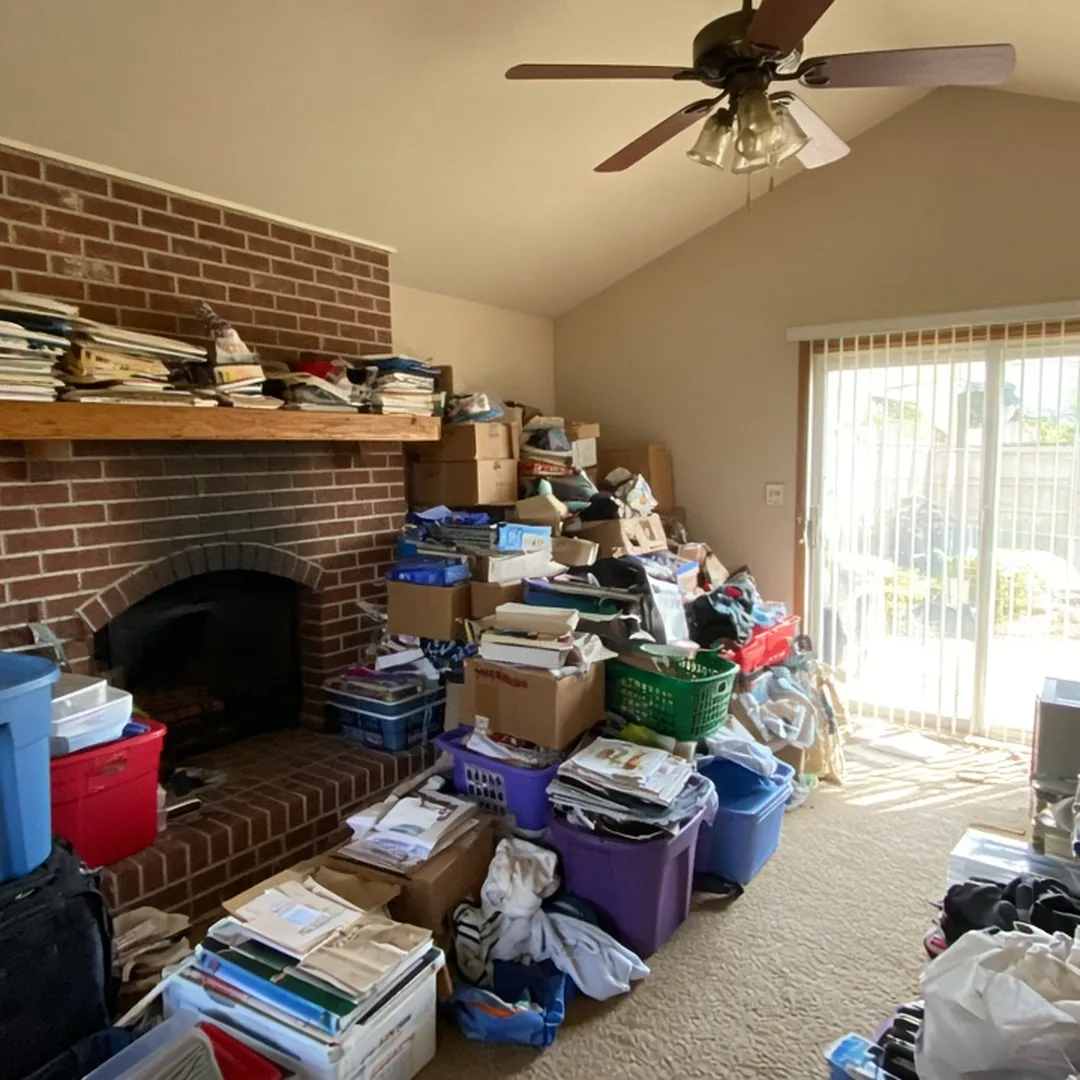
Hoarded family room in an Arlington home with stacked boxes and bags blocking the path to the back door

Hoarding Cleanup Services in Arlington

Biohazard removal from hoarded homes in Arlington.

Droppings, nests, waste, spoiled food, and moldy belongings come out first, and every surface they sat on gets disinfected. Where waste has worked into carpet, pad, or drywall, those materials go too. The biohazard hoarding cleanup page walks through the full decontamination.

Odor removal from hoarded and neglected homes in Arlington.

Providers pull the carpet, pad, furniture, and drywall that hold urine, waste, and decay odors, then clean and seal the subfloor and framing so the smell stays gone. Proper odor removal treats the source, not the air.

Cleanup after animal hoarding in Arlington.

Urine-soaked flooring and baseboards come out, feces and bedding get cleared, and the rooms the animals lived in get disinfected. The animals need to be rehomed before the work starts. The scope of an animal hoarding cleanup follows the number of rooms and the amount of flooring that has to go.

Emptying and sanitizing a loved one's hoarded home in Arlington.

The house gets sorted by the family's rules, with papers, photos, cash, and keys pulled out as they turn up, and the home is left empty and sanitized for a sale, a contractor, or the next tenant. Hoarded estate cleanouts run from the first walkthrough to the last mopped floor.

Work is performed by independent professionals.

Arlington Homes and the Decades Inside Them

Arlington's housing came in a wave. Census figures put 41,290 of the city's 150,519 housing units in the 1980s, the largest decade, with another 29,870 built in the 1970s. About 54% of homes are owner-occupied, the median owner-occupied value sits near $305,000, and 12% of Arlington residents are 65 or older. A house bought in the 1980s and lived in ever since holds four decades of belongings. Hoarding cleanup providers clear those homes to bare floors, room by room, and set aside what the family wants kept.

Heat, Rain, and Mold Behind the Piles

Arlington has no official weather station of its own, so the nearest record is the National Weather Service's Dallas/Fort Worth station, kept at DFW Airport since 1974. Its 1991-2020 normals show 37.01 inches of rain a year and a mean temperature of 66.6°F. Warm, wet weather and a roof leak or plumbing drip behind a wall of boxes is how mold takes hold in a hoarded room. The EPA puts it simply: mold control is moisture control. Moldy belongings get bagged, the damp wall or floor gets opened, and the wet drywall and flooring come out.

When a Hoard Brings a Code Violation

A hoard that spills outside the house can bring an Arlington code compliance case. The city's nuisance chapter treats accumulations of refuse, rubbish, junk, and waste, along with conditions that harbor rodents, as unclean premises, with fines up to $2,000 and each day counted as a separate offense. Discarded indoor furniture and appliances stored outside an enclosed structure, including under a carport, fall under the outside storage section, with fines up to $500 a day. When a notice has a deadline, providers typically clear the yard, porch, carport, and garage first, then move inside. The guide to Arlington code notices for junk and rodents covers each section and fine.

Where an Arlington Cleanout Goes

An Arlington cleanout needs more than curbside pickup. Republic Services collects bulk items on recycling day at 1 cubic yard per service day, one item at a time, which can't keep up with a hoarded house. Hoarding cleanup crews haul the load themselves, pulling out furniture and goods worth donating before the rest heads to disposal.

Paint, solvents, pesticides, pool chemicals, batteries, and motor oil go to the Environmental Collection Center at 6400 Bridge Street in Fort Worth, which takes them free from Arlington residents on Thursdays and Fridays from 11 a.m. to 7 p.m. and Saturdays from 9 a.m. to 3 p.m. Residents bring a driver's license or water bill, and the center asks for no more than one visit a month. Those items get pulled aside the moment they turn up, so none of them end up in a landfill load. Here's where hazardous items from an Arlington cleanout go, item by item.

Signs It's Time for a Professional Crew

It's time for a professional crew once a home hits Level III on the Institute for Challenging Disorganization's Clutter-Hoarding Scale, the turning point from cluttered to hoarded. These signs mean a home is past a weekend cleanup.

  • Boxes or bags block a door, a hallway, or the way out of a bedroom.
  • Mice or rats can be heard in the walls, or droppings turn up in drawers.
  • Trash has piled past the cans, or food is spoiling in the kitchen.
  • A toilet, tub, or sink no longer works or can't be used.
  • Pet waste covers the floors, or there are more animals than anyone can care for.
  • Neighbors can smell the house from the yard.
  • Mold is growing on walls, ceilings, or stored boxes.

If the home shows any of these, call 817-270-9579 to connect with a local provider.

What to Look for in a Provider

  • Contamination handled properly. Waste and droppings get wetted, bagged, and disinfected, not swept up and hauled loose.
  • Sorting by your rules. You decide what's kept, donated, and thrown away before the first bag is filled.
  • Hazardous items separated. Paint, chemicals, batteries, and old medications stay out of the trash.
  • Scope in writing. The work is laid out room by room before it starts.
  • No judgment, ever. A death, a move to care, a landlord's notice, or a code case all get the same respect for the family and the home.

The Four-Step Process

A hoarding cleanup runs the same way in every house. First, the provider tours the home with you, room by room, noting hazards and anything that must be saved. Second, you get a written plan with the scope and the room order. Third, the crew works through the house, soaking contaminated areas before lifting anything and sorting along the way. Finally, the empty rooms are disinfected and deodorized, and the provider does a last walkthrough with you.

What a Written Scope of Work Should Cover

A written scope for a hoarding cleanup should describe the work itself, not just the number of loads. These items belong in it.

  • Room-by-room scope that names the hoard level and the hazards in each
  • Hauling and disposal, including where the loads go
  • Keep, donate, and discard terms, plus how papers and valuables are protected
  • Hazardous item handling for paint, chemicals, batteries, and medications
  • Sanitizing and odor work, with the materials that get removed and the surfaces that get disinfected

A scope that skips the disinfection, the hazardous items, or the odor removal leaves part of the job undone.

Service Areas Around Arlington

Hoarding cleanup providers work across Arlington and in the towns inside and around it. That includes Pantego, a one-square-mile town surrounded on three sides by Arlington, plus Dalworthington Gardens, Grand Prairie, Mansfield, and Kennedale. Every town covered is on the service areas page, and a call to 817-270-9579 confirms any address.

Frequently Asked Questions

Can I take a hoarded house's trash to the Arlington landfill for free?

Eligible Arlington homeowners get three free drop-offs a year at the Arlington Landfill for household loads such as old carpet and appliances. The free visits require a Texas driver's license or ID that matches an Arlington Water Utilities account. Contractors, landlords, owners of multiple properties, and apartment tenants pay the regular fees. A heavily hoarded house can take more than three loads, and any extra loads go at the standard rates.

How long does it take to clean out a hoarder house?

Clearing a single room takes about a day, while a fully hoarded house runs several days. How deep the hoard goes, how carefully the family wants things sorted, and whether rodents, waste, or mold are involved all change the schedule. A Level IV or V home takes longer because every contaminated pile gets soaked and bagged before it moves. The written scope lists the expected number of days.

What happens to old medications found in a hoarded home?

Old prescriptions can't go to the Environmental Collection Center, which lists pharmaceuticals and sharps as not accepted. The Arlington Police Department holds drug take-back events in spring and fall that accept controlled, non-controlled, and over-the-counter medications, sealed liquids, and auto-injectors. Syringes, IV solutions, and inhalers are not accepted at those events. Cleanup crews typically gather medications in one sealed container during the cleanout so the family can take them in.

Will a hoarding cleanup stop an Arlington code compliance case?

Clearing the outside of the property addresses the conditions the code compliance case cites, such as junk, trash, discarded furniture under a carport, and conditions that harbor rodents. Each day a violation continues counts as a separate offense under the city's nuisance chapter, so the deadline on the notice matters. Providers typically start with the yard, porch, carport, and garage, then move inside. The property owner should confirm with the code officer once the work is done.

Can a family clean out a hoarder house on its own?

A family can clear light clutter on its own, but rodent droppings, waste, and mold call for protective steps. CDC guidance is to wear rubber or plastic gloves, soak droppings and nests in a 1-to-9 bleach mix for 5 minutes, and add a HEPA-filtered respirator when the infestation is heavy. A hoard has those hazards through every layer, mixed with spoiled food and spilled chemicals. Have a professional provider walk through it before anyone touches the piles.

Are there hoarding cleanup providers in Pantego and Grand Prairie?

Yes. Pantego, Dalworthington Gardens, Grand Prairie, Mansfield, and Kennedale are all covered along with Arlington. Disposal rules depend on the city, since programs like the Arlington Landfill's free drop-offs and the Environmental Collection Center's free service are tied to Arlington residency. Providers plan the disposal around the city the home is in. A call to 817-270-9579 confirms the address and connects you with a local provider.

Call Now

For a hoarded home in Arlington, call 817-270-9579 to connect with a local hoarding cleanup provider. Providers typically offer a no-obligation on-site assessment, flag every hazard, settle what the family keeps, and leave the house cleared and sanitized. Questions can also go to [email protected].

Call 817-270-9579
Call 817-270-9579Call Now