
Biohazard Cleanup Inside Hoarded Arlington Homes
Local biohazard cleanup providers clear rodent droppings, human and pet waste, spoiled food, and mold out of hoarded homes in Arlington, TX, and disinfect every surface underneath. The Texas Department of State Health Services counted 43 hantavirus cases in the state from 1993 through late 2014, 14 of them fatal, and the virus spreads when people breathe dust from stirred-up rodent nests and droppings. Call 817-270-9579 to connect with a local provider.
What Counts as a Biohazard in a Hoard
A biohazard in a hoard is any material that can spread disease once it's disturbed. These are the ones a biohazard hoarding cleanup removes.
- Mouse and rat droppings, urine, nests, and chewed packaging
- Human waste in containers, bags, or a toilet that stopped working
- Pet messes soaked into rugs, couches, and beds
- Food rotting in the kitchen, the refrigerator, and inside the piles
- Mold on drywall, ceilings, carpet, and stored paper or fabric
- Needles and used medical supplies buried in the clutter
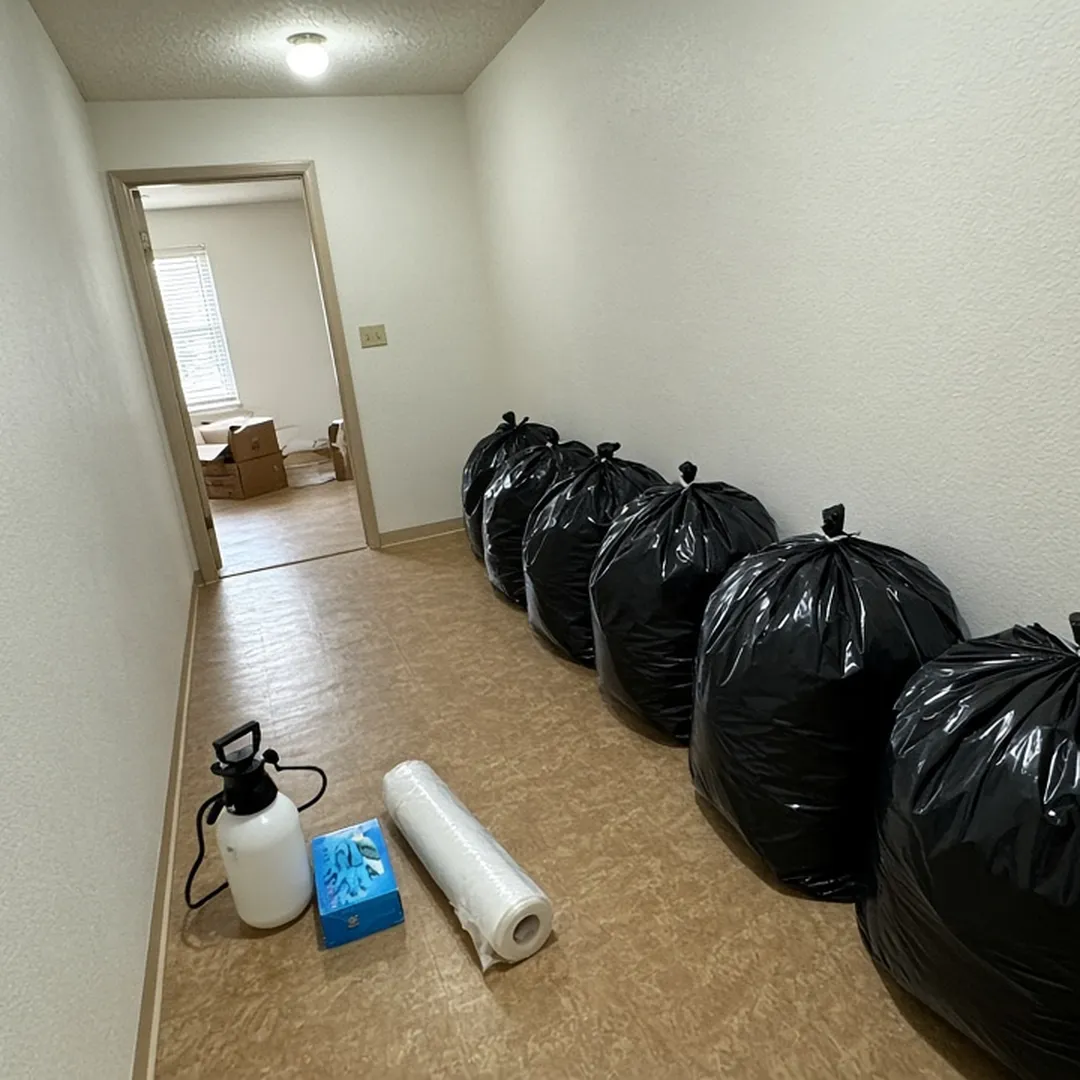
This material gets sealed in separate heavy-duty bags so none of it gets mixed in with the furniture and goods going to donation.
How a Hoarded Home Gets Decontaminated
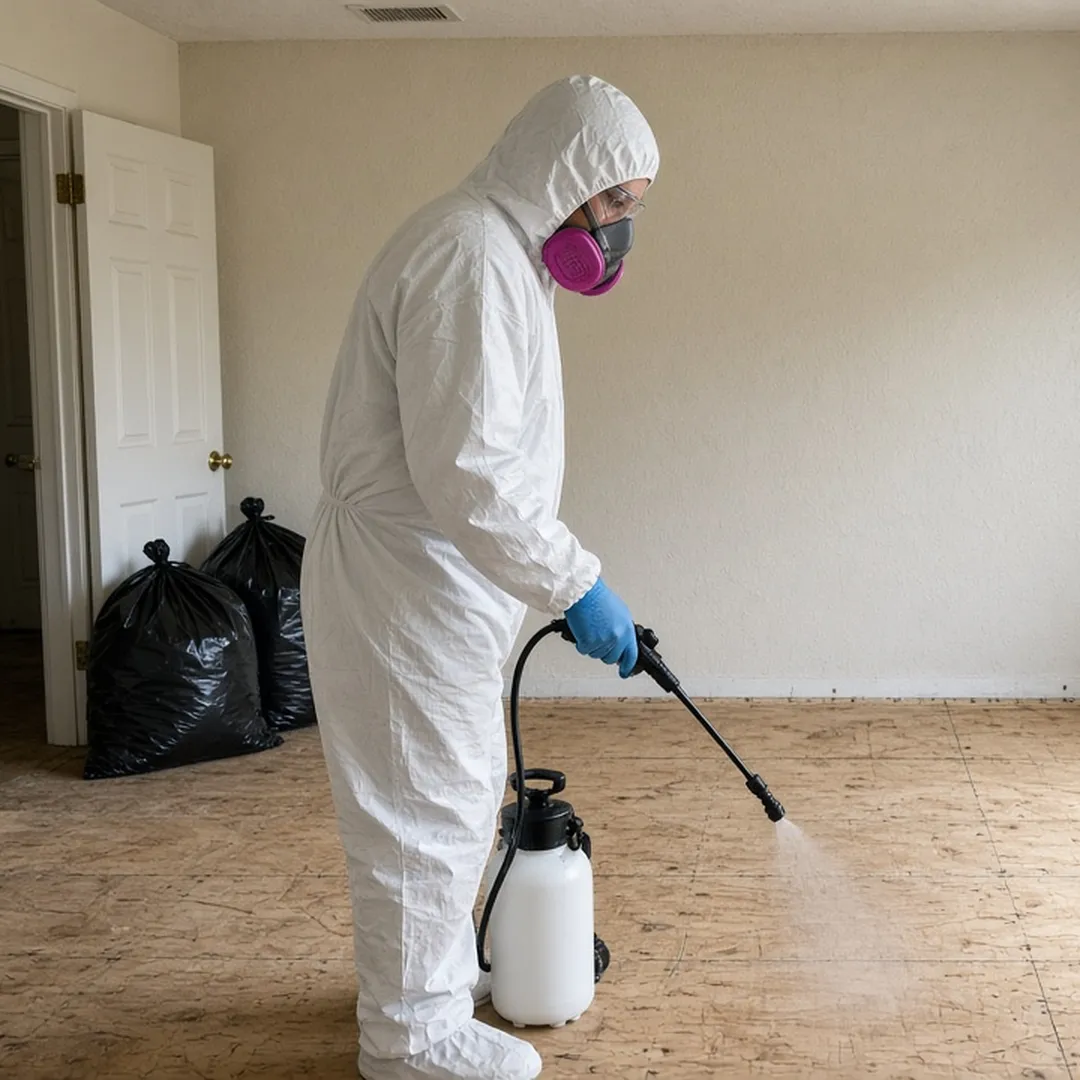
Decontaminating a hoarded home happens in a fixed order. First, the house gets aired out and every room is checked for droppings, waste, and mold before a single pile moves. Second, nests, droppings, and waste are soaked with disinfectant so the material is wet when it's lifted. Third, contaminated material goes into sealed bags, soaked carpet, pad, and drywall are torn out, and all of it leaves on a separate load from the household goods. Finally, bare floors, walls, and fixtures get disinfected, and odor treatment goes on whatever surfaces remain.
Why Texas Health Officials Warn Against Sweeping
Texas health officials warn against sweeping and vacuuming rodent nests for a reason. The state health department's guidance is to dampen nests, droppings, urine, and dead rodents with a 1-to-10 bleach solution or another disinfectant before cleanup, because a broom or vacuum puts the contaminated dust in the air. In a hoard, that dust is spread through every box and bag. Qualified providers wet each layer before it moves, room by room.
Mold in North Texas Hoards
Mold grows in hoarded rooms when water reaches the piles and can't dry out. The National Weather Service's Dallas/Fort Worth station, at DFW Airport, records 37.01 inches of rain in an average year, and a roof leak or a slow plumbing drip behind a stack of boxes soaks everything against it. A thorough cleanup removes the moldy contents and the drywall and flooring the moisture reached, and notes the water source in writing so it gets repaired before the room is closed back up.
Work is performed by independent professionals.
Frequently Asked Questions
How is human waste cleaned out of a hoarded house?
Human waste in a hoarded house gets soaked with disinfectant, lifted out in sealed liners, and kept apart from everything else leaving the home. Containers, bags, and soiled bedding go out whole. Carpet, pad, mattresses, and subfloor sections that absorbed waste come out of the house. The surfaces left behind get cleaned, disinfected, and sealed where needed so the room is safe to use again.
Can hantavirus be caught from cleaning a hoarder house?
Yes. Hantavirus spreads when people breathe dust from rodent nests, droppings, and urine that gets stirred up, and Texas has recorded fatal cases. A hoard holds that material through every layer, so moving piles dry is the risky part. Dampening droppings and nests with a bleach solution before touching them keeps the dust down. A crew working in a heavily infested home also wears respirators.
What happens to needles found in hoarded homes?
Any needles or used medical supplies in the piles go straight into rigid sharps containers instead of trash bags, which keeps everyone on the job from getting stuck. A careful crew points them out to the family as they're found. Arlington's Environmental Collection Center doesn't accept sharps or medical waste, and the police department's drug take-back events don't take syringes, so sharps are handled separately from household waste.
Is mold in a hoarded house dangerous?
Mold in a hoarded house releases spores when the piles are moved, and that can irritate the lungs, especially for people with asthma or allergies. The bigger issue is the water behind it, since mold only grows where something stayed wet. Providers bag moldy contents, remove the materials the water reached, and record the leak or plumbing failure that caused it. Anyone sensitive should stay out of affected rooms until the work is done.
What happens to contaminated items after a biohazard cleanup?
Contaminated items go to disposal, sealed in heavy-duty bags. Porous materials like mattresses, upholstered furniture, carpet, cardboard, and soaked paper can't be made safe, so they don't go to donation. Metal, glass, and sealed plastic can be disinfected and kept if the family wants them back. Before anything on the family's keep list is thrown out, the crew should show it to the family.
Call Now
When an Arlington hoard has rodents, waste, or mold in it, call 817-270-9579 to connect with a local provider before anyone touches a pile. Read about odor removal, the complete Arlington hoarding cleanup service, or the contact page.